|
Confidence in sport is one of the most talked-about performance factors – and one of the most misunderstood. Athletes often feel confident one moment and uncertain the next. A missed shot, a bad shift, a mistake early in the game, or a stretch of poor results can suddenly shake belief. That leads many athletes to ask the wrong question: “How do I get my confidence back?” A better question is this: “How do I build confidence that doesn’t disappear when things get hard?” This article breaks down what confidence in sport actually is, why it feels fragile, and how athletes can build a form of confidence that holds under pressure. _________________ Why Confidence Feels So FragileMost athletes are taught – directly or indirectly – to tie confidence to results. This is Outcome-Dependent Confidence. It often shows up like:
This outcome-dependent confidence, is unstable by nature. Performance fluctuates. Opponents get better and games don’t always go your way. When confidence is built on outcomes, it rises and falls with circumstances you don’t fully control. The result? _________________ There are several myths make confidence harder than it needs to be. Some of the common confidence myths in sport include:
In reality, confidence isn’t the absence of doubt or nerves. It’s the ability to function effectively even when those feelings are present. _________________ Confidence Is a Skill, Not a TraitConfidence in sport is built through what you do consistently, not how you feel. Feeling good is over-rated. Some of the best athletic performances in sport history started on days the athlete didn’t feel good. Would we all like to be feeling good – yes of course, but it is not a pre-requisite for a good performance. Here are three pillars of durable confidence: 1. PreparationPreparation is the foundation of confidence. Athletes who prepare well don’t rely on hope or emotion. They rely on evidence:
Preparation includes:
Confidence grows when preparation creates familiarity – especially under pressure. 2. Self-TalkSelf-talk doesn’t mean hype or fake positivity. It means functional communication with yourself. Effective self-talk:
Examples:
Confidence weakens when self-talk becomes emotional, judgmental, or catastrophic. It strengthens when self-talk supports execution. 3. Trust in the ProcessTrust is what allows athletes to perform without overthinking. When athletes lose confidence, they often:
Trust means staying committed to:
Confidence isn’t about guaranteeing success – t’s about staying anchored in your process regardless of outcomes. _________________ Confidence vs Anxiety: What’s the Difference?Confidence and anxiety often coexist. The difference is how athletes interpret internal signals. Anxiety becomes a problem when athletes interpret arousal as danger:
Confidence collapses under pressure when:
The most confident athletes aren’t the calmest – they’re the ones who can act effectively while activated. 👉 To go deeper into how athletes manage pressure and stress responses in: Performance Anxiety in Sport: Why Athletes Feel It and How They Learn to Perform Through It _________________ Confidence in Different Sport ContextsTeam vs Individual SportsConfidence in team sports is influenced by:
In individual sports, confidence is often shaped by:
Both environments require athletes to separate self-worth from performance outcomes. Mistake-Heavy EnvironmentsSports like hockey, soccer, basketball, baseball, and volleyball are mistake-rich by nature. Confidence suffers when athletes expect perfection. High-confidence athletes:
Low-confidence athletes:
👉 Related reads on environment, mindset, and performance contexts Mental Performance & Sport Psychology in Hockey Mental Performance & Sport Psychology in Baseball _________________ Rebuilding Confidence After InjuryAnother area where confidence can take a hit is after an injury. Injury doesn’t just disrupt the body – it disrupts trust. Athletes returning from injury often struggle with:
Rebuilding confidence post-injury requires:
Confidence returns when athletes regain trust in their body and decision-making, not when fear disappears entirely. 👉 For a deeper dive on injury, recovery, and mental readiness, read: Mental Performance for Injured Athlete _________________
Confidence in sport isn’t something you wait for a feeling – it’s something you build intentionally. The strongest confidence:
When athletes stop chasing confidence and start training it, performance becomes more consistent—and pressure becomes manageable. Want to read more on the confidence – self-efficacy relationship? Check out these links: Self-efficacy: The theory at the heart of human agency Confidence and performance chapter from Weinberg & Gould _________________
Build Confidence That Transfers to Competition
If you want help developing confidence that holds up in games – not just in practice – Build Confidence That Transfers to Competition → Book a Consultation Strong confidence isn’t loud. It’s reliable.
FAQ – About Confidence in SportWhat is confidence in sport?Confidence in sport is an athlete’s belief in their ability to execute skills, make decisions, and stay committed to their process – especially under pressure. It’s built through preparation, experience, and trust in what you’ve trained, not just through success or outcomes. Why do athletes lose confidence under pressure?Athletes often lose confidence when it’s tied to results, mistakes, or external feedback. Under pressure, attention shifts from controllable actions to outcomes or fear of failure, which causes hesitation and self-doubt. Is confidence a skill athletes can train?Yes, confidence is a trainable mental performance skill, not a personality trait. Athletes build confidence through consistent preparation, effective self-talk, and practicing how to respond after mistakes or setbacks. What’s the difference between confidence and anxiety in sport?Confidence and anxiety can exist at the same time. Anxiety is a normal stress response, while confidence is the ability to perform effectively even when nerves, doubt, or pressure are present. How do injured athletes rebuild confidence?Injured athletes rebuild confidence by gradually restoring trust in their body and decision-making, not by waiting to “feel ready.” Clear rehab benchmarks, mental rehearsal, and progressive exposure to sport situations help confidence return alongside physical recovery. |
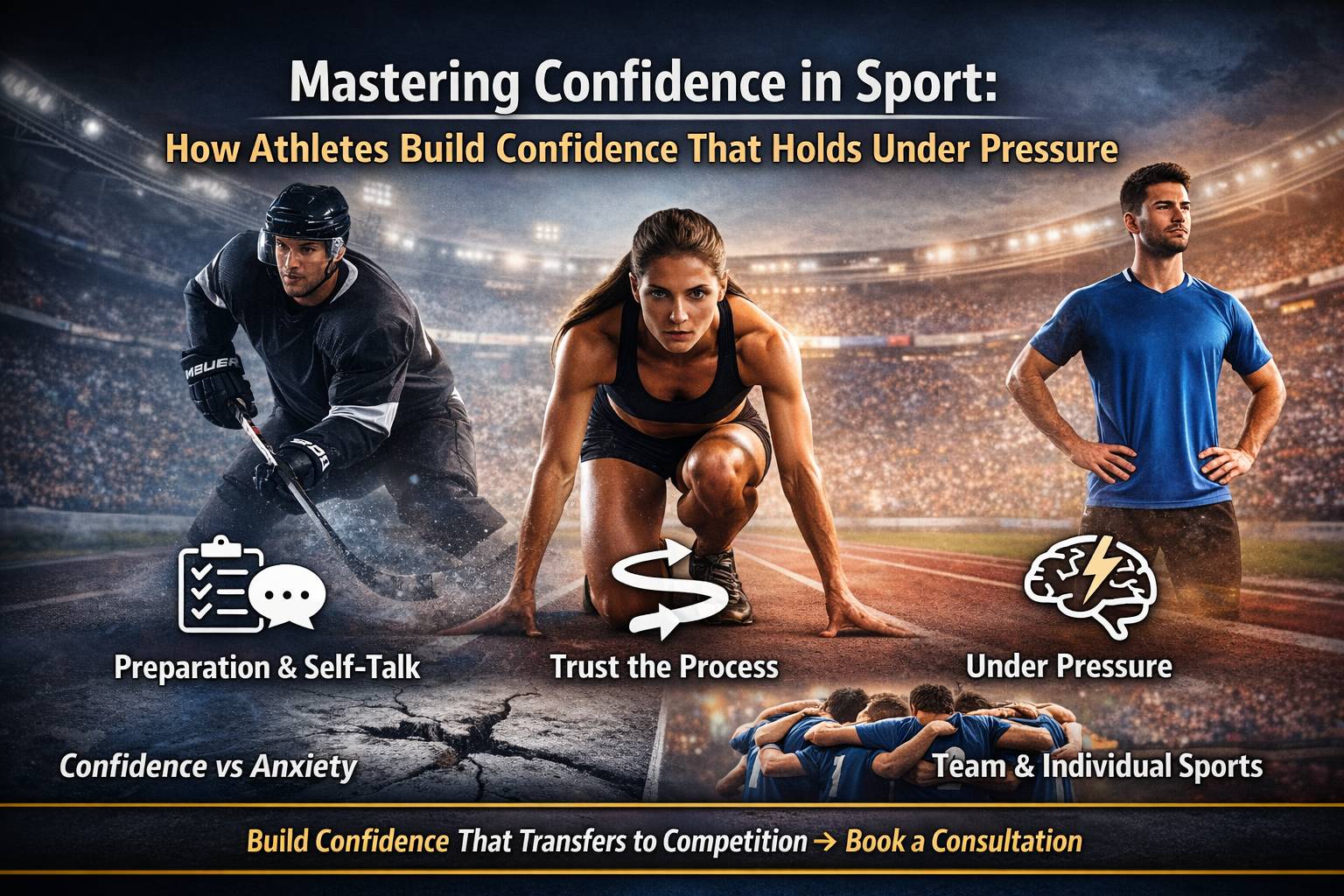
Mastering Confidence in Sport: How Athletes Build Confidence That Holds Under Pressure