|
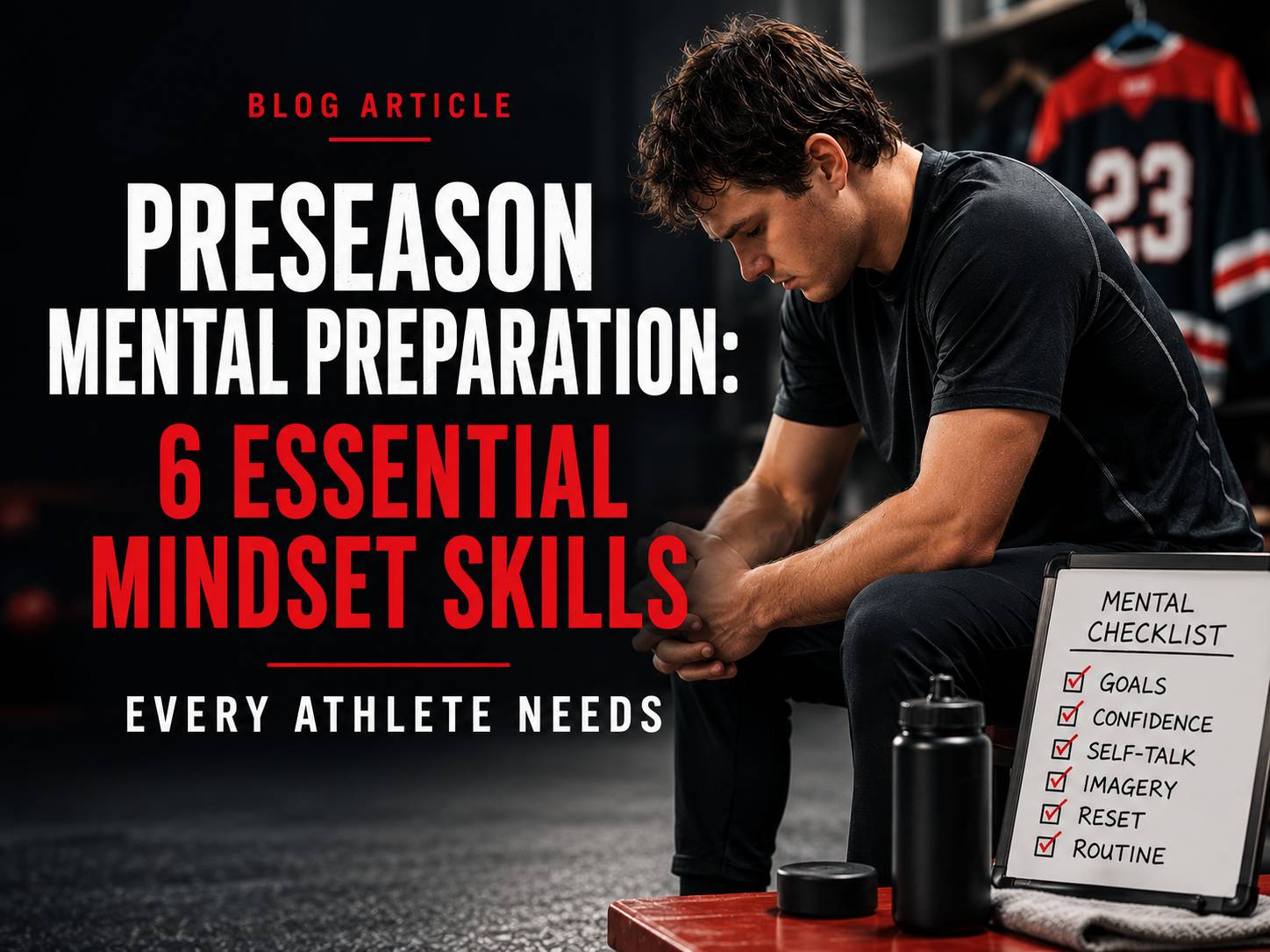
As a new season approaches, athletes usually know exactly what they’ve done to prepare physically. They’ve trained, practiced, and worked on strength, conditioning, speed, technique, and sport-specific skills. But there’s another question worth asking: What have you done to prepare your mind for the season ahead? The competitive season will bring pressure, mistakes, expectations, uncertainty, fatigue, changing roles, tough opponents, and moments when confidence gets tested. You can’t predict exactly when those moments will arrive – but you can prepare for how you want to respond to them. That’s the purpose of pre-season mental preparation. “The will to win is not nearly as important as the will to prepare to win.” – Bobby Knight
_______________
Mental Performance Is Something You TrainMental performance shouldn’t be something you reach for only when confidence disappears or anxiety becomes overwhelming. Like physical skills, psychological skills become more useful when they’re learned, practiced, and refined before you need them. Research supports this: psychological skills training such as self-talk, imagery, attentional control, relaxation, goal setting has been linked to improvements in sport performance. The preseason is the window to build and refine these skills. So instead of asking “Am I physically ready?” ask: “Am I mentally prepared for what this season might demand from me?” Here are six areas to consider. 1. Get Clear on What You Want to BuildGoals matter, but alone aren’t enough. Athletes often enter a season focused entirely on outcomes – make the team, score 20 goals, win a championship, earn a scholarship, get more playing time. There’s nothing wrong with outcome goals; the problem is that most of them aren’t fully in your control. A better approach is to connect outcomes to standards and behaviours:
For example – Outcome: become a top-six forward. Performance: create more offensive opportunities. Process: compete for loose pucks, communicate, attack the middle, recover quickly after mistakes, and prepare consistently. Your outcome gives you direction. Your daily behaviours give you something to execute. Preseason action: Write down one major goal for your season, then identify three controllable behaviours that increase your odds of reaching it. 2. Build Your Confidence Before You Need ItA common misconception is that athletes need to feel confident before they can perform confidently. In reality, confidence is trainable – shaped by preparation, past accomplishments, coaching, social support, and how you interpret your own experiences. Instead of waiting for confidence to show up, start collecting evidence of things you have accomplished. At the end of training, ask: What did I do today that makes me more prepared for my season? Your answers might include completing a hard conditioning session, staying composed when frustrated, asking your coach for feedback, or finishing training when tired. Confidence grows when you repeatedly recognize: I’ve prepared for this, I’ve put in the time, and I have done everything I need to do to get ready. 3. Train Your Self-TalkEvery athlete carries on an internal conversation – after mistakes, before competition, when tired, when nervous, when things go sideways. The goal isn’t to eliminate negative thoughts or force positivity. It’s to make your thinking useful. A meta-analysis found a moderate positive effect of self-talk interventions on sport performance, with different types of self-talk suited to different tasks. Three forms are worth building:
Preseason action: Develop three to five short phrases you can use throughout the season – and practice them in training, not just competition. 4. Rehearse Performance Before It HappensVisualization or Imagery – or mental rehearsal – lets you work through movements, decisions, emotional responses, and challenging situations before they happen. Importantly, imagery isn’t just picturing yourself winning; some of the most useful imagery is rehearsing how you want to respond when things don’t go perfectly. A 2025 meta-analysis of 86 studies and over 3,500 athletes found imagery practice enhanced multiple dimensions of performance, and worked especially well combined with other psychological skills. Try visualizing: executing your skills successfully, your pre-performance routine, competing confidently, staying composed under pressure, recovering after a mistake, responding to a bad call, or performing late in competition while tired. You’re not predicting what will happen – you’re rehearsing how you want to respond. Preseason action: Spend 5–10 minutes, three times a week, mentally rehearsing upcoming practices and competitions. Make the imagery vivid and specific to your sport. 5. Develop Your Reset Before You Need OneAt some point this season, something will go wrong. The best athletes aren’t the ones who never get frustrated, distracted, or disappointed – they’re the ones who get better at returning their attention to what matters next. That’s why preseason is the time to build a reset routine. A simple framework: Recognize → Refocus → React.
This can take five seconds – that’s the point. You’re not trying to eliminate emotion; you’re training yourself to regain control of your attention. Research on psychological skills and mindfulness training suggests both can improve attentional control and emotional management during competition. Preseason action: Create one reset routine and practice it deliberately after mistakes in training – don’t save it for competition. 6. Create Your Performance RoutineRoutines reduce unnecessary decision-making and direct attention toward useful cues. Think of a routine as the bridge between preparation and execution – and preseason is the time to experiment and find what actually works for you.
Research on reducing choking under pressure found benefits across pre-performance routines, mindfulness, self-talk, and attentional strategies, though effectiveness varies by sport and task demands. The key is that routines shouldn’t debut on opening night – practice them now. _______________
Don’t Just Prepare for Your Best DayThere’s one part of preseason preparation athletes often overlook: we tend to prepare for everything going right. But seasons rarely work that way. You may lose playing time, make mistakes, hit a slump, clash with a teammate, get difficult feedback, or lose an important game. The question isn’t whether adversity will show up – it’s whether you’ve prepared to respond when it does. Mental preparation isn’t about believing everything will go perfectly. It’s building the psychological skills to perform effectively even when it doesn’t. _______________ Your Preseason Mental Performance Checklist
You don’t need dozens of mental skills. You need a few reliable ones you’ve practiced enough to trust.
_______________
The Performance ChallengeBefore your next practice, choose one mental skill from this article. Don’t just read about it — train it. Spend five minutes visualizing. Write your three controllables. Create your reset cue. Practice your pre-performance routine. Then use that skill deliberately in practice. Mental performance training becomes valuable when it moves from something you know to something you can do under pressure. _______________
Key Takeaways
_______________ Self-Reflective MomentIf I knew this season was going to test my confidence, focus, composure, and resilience at some point — what mental skills would I want to have trained before that moment arrives? _______________ Prepare Your Mind Like You Prepare Your BodyYou wouldn’t expect your body to be ready for the season without training it. Your mind is no different. The goal of preseason mental preparation isn’t to guarantee confidence, eliminate nerves, or make sure everything goes according to plan. It’s to build the skills that help you respond effectively when competition gets difficult. The season will test you. There will be pressure, mistakes, uncertainty, frustration, and moments when you don’t feel your best. You can’t control when those moments arrive, but you can prepare for who you want to be when they do. Train your mind now, so you can trust it when the season asks more of you. _______________
ReferencesBrown, D. J., & Fletcher, D. (2017). Effects of psychological and psychosocial interventions on sport performance: A meta-analysis. Sports Medicine, 47, 77–99. Hatzigeorgiadis, A., Zourbanos, N., Galanis, E., & Theodorakis, Y. (2011). Self-talk and sports performance: A meta-analysis. Perspectives on Psychological Science, 6(4), 348–356. Reinebo, G., Alfonsson, S., Jansson-Fröjmark, M., Rozental, A., & Lundgren, T. (2024). Effects of psychological interventions to enhance athletic performance: A systematic review and meta-analysis. Sports Medicine. |