|
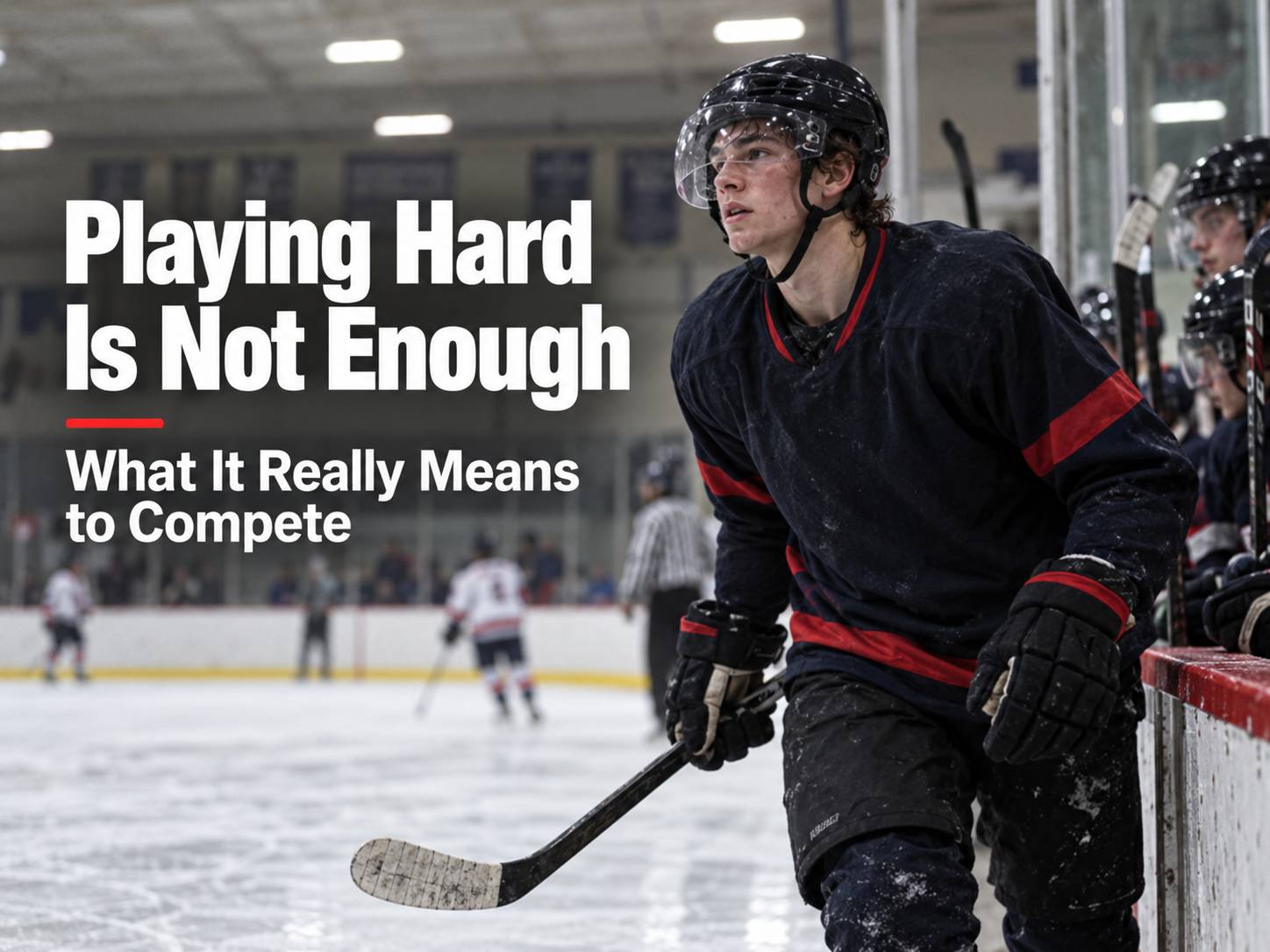
Walk into almost any locker room and you’ll hear a coach say it: “We need to compete harder.” “Be more competitive.” “Win more battles.” You’ve probably heard it a hundred times. And if you’re like most athletes, you assume it means one thing – play harder. Here’s the truth: playing hard and being a competitor are not the same thing. Understanding the difference won’t just change how you perform. It can change how you handle pressure, how you bounce back from a bad play, shift or even game, and how you feel about yourself when sport gets tough. _________________
Playing Hard vs. Being a CompetitorAt its simplest: playing hard is effort. Competing is how you respond to challenge. Playing hard is the stuff everyone can see – energy, hustle, intensity, work ethic. Backchecking at full speed. Diving for a loose ball. Sprinting to close down an opponent. All of that matters. But it’s only effort. Competing goes deeper, and it only shows up when things get hard. How do you respond when you make a mistake? When you get benched? When your confidence disappears? When the ref makes a terrible call, or you’re down two goals with five minutes left against a team that’s clearly better than yours? Anyone can play hard when things are going well. Competitors stay engaged when they’re not. _________________
Why This Matters More Than You ThinkA lot of athletes think mental performance means confidence, motivation, or positive thinking. It doesn’t. Mental performance is your ability to execute your skills under pressure, uncertainty, and adversity – which sounds a lot like competing. Research on elite athletes consistently points to the same set of skills: resilience, emotional control, focus, flexibility, and the ability to manage stress. These are what allow top performers to stay in the fight through discomfort, setbacks, and mistakes. Here’s what might surprise you: elite competitors aren’t necessarily calmer than you. They aren’t necessarily more confident than you. They’re just better at responding when things get difficult. That’s a skill – and skills can be trained. _________________ The Part Nobody Talks About: Your Mental HealthThis isn’t just about performance. It’s about how you feel. If your entire identity is wrapped up in results – your stats, your playing time, your spot in the lineup – then every setback feels personal. Losing your starting position, getting injured, having a rough stretch, or getting cut doesn’t just sting. It can feel like an attack on who you are. Research shows athletes whose sense of self is tied too tightly to outcomes are more likely to experience anxiety, stress, and burnout. Competitors think differently. Instead of asking “Why is this happening to me?” they ask “How do I respond to this?” That one shift puts you back in control. This is called a mastery-focused approach, and it’s linked to greater resilience, persistence, wellbeing, and motivation over the long run. _________________
What Competitors Do Differently
1. They focus on the next playMistakes are guaranteed. Competitors don’t waste energy replaying them – they shift straight to what comes next and reset with a reset cue quickly. What’s my next responsibility? What can I control right now? What does my team need from me? This “next play mentality” stops the mental spiral and protects your confidence. Using the principle of WIN – not win as in win the game but – WHAT’S IMPORTANT NOW. 2. They lean into discomfortMost athletes want to feel confident before they act. Competitors know it usually works the other way around – confidence follows action. They take the shot. They call for the ball. They step up when nobody else wants to. They know growth only happens outside the comfort zone. 3. They control their emotions instead of being controlled by themBeing competitive doesn’t mean being fiery or losing your cool. The best competitors feel frustration, nerves, and disappointment just like you do – they just don’t let those feelings run the show. Research on emotional regulation shows athletes who manage their emotional responses perform better under pressure and recover faster from setbacks. This helps with confidence and consistency the two things most athletes want more of. 4. They find another way to contributeWhen the goals aren’t coming, competitors don’t disappear. They communicate. They defend. They bring energy. They pick up teammates. Their value isn’t tied to one stat, which protects both their performance and their wellbeing. _________________ Change the Post-Game ConversationHere’s something you can actually control: how you talk about your games: “Did you win?” is the least useful question in sport. Try these instead:
Ask yourself these after every game and you’ll start measuring yourself by your response to adversity – not just the scoreboard. That’s a habit that builds resilience for life. _________________ Five Ways to Train It
1. Build a Competitor ChecklistBefore competition, ask yourself:
Then judge your game on those behaviors – not the box score. 2. Use the Three RsWhen adversity hits: Release what happened. Reset and flush what happened. Refocus on your next action, next play. It’s a simple process that moves you from emotion to action in seconds. 3. Track responses, not resultsAfter each game, rate yourself 1–10 on resilience, effort, emotional control, focus, and response to mistakes. Over time, these numbers predict your long-term success better than your stats do. 4. Make an adversity planBefore competition, identify what could go wrong and decide in advance how you’ll respond. Preparation builds confidence and keeps your emotions from hijacking the moment. 5. Separate who you are from how you playedRemind yourself regularly: I am more than my performance. You are not your stats. You are not your playing time. You are not your last game. Performance is something you do — not who you are. _________________ Final ThoughtsPlaying hard is valuable. Effort matters. But effort alone doesn’t make you a competitor. True competitors show resilience when things get difficult. They control their emotions, embrace challenges, focus on what they can control, and keep moving forward through adversity. And here’s the best part: the exact skills that help you perform under pressure are the same skills that protect your mental health long after the season ends. Learning to compete isn’t just preparation for sport. It’s preparation for life. Playing hard is effort. Competing is effort plus resilience. And resilience may be the most valuable skill you ever develop. _________________
Self-Reflection QuestionWhen adversity shows up in sport or life, do I spend more time reacting to the challenge — or responding to it? Want to go deeper? The ideas in this post are grounded in sport psychology research on psychological resilience (Fletcher & Sarkar, 2012; Gould et al., 2002), motivation (Deci & Ryan, 2000), emotion regulation (Gross, 2015), and athlete identity and burnout (Gustafsson et al., 2017). _________________
|