The Performance FactorYou watched the whole game. You saw the moment it turned: the missed chance, the hesitation, the drop in energy. You want to help your athlete make sense of it because they seem stuck! But your athlete already has people analyzing their performance. Coaches break down tactics. Trainers track the numbers. Video captures every mistake. When a parent adds another layer of analysis, it can weigh on an athlete more than you might expect. Timing matters too. The brain’s prefrontal cortex, which handles reasoning, planning, and emotional regulation, continues developing into the mid-20s. Right after a tough performance, emotions run high, and even adult athletes find clear thinking harder in those moments. For many athletes, a post-game breakdown often lands as criticism, not learning. Reflection works best once emotions have settled. Your athlete doesn’t need another coach. They need someone who helps them become a better learner: someone who asks rather than tells, and who stays the same whether they win or lose. The goal isn’t to stop talking about sport. It’s to change your role from analyst to guide, from giving answers to helping your athlete find their own. Athletes who learn to be detectives of their own game become better problem-solvers under pressure. That skill builds confidence and helps them handle the stress and pressure of competition. ________________
The ScienceAthletes learn more when they do the thinking. Research on debriefs shows that structured reflection improves performance across many settings, especially when it’s specific and grounded in what actually happened. The key word is reflection: the learner does the work. When a parent hands over the diagnosis, the athlete gets an answer. When the athlete works it out, they build a skill they’ll use for their whole career. Autonomy drives development. Sport parenting research consistently highlights the value of warm relationships that respect the athlete’s independence. Athletes who make their own sense of a performance take more ownership of what comes next. That matters more as they move toward adulthood and higher levels of competition, where no parent is in the locker room. Specific beats sweeping. After a loss, athletes often jump to judgments: “I was terrible.” “I always choke.” These feel true in the moment but offer nothing to work on. Learning starts when the athlete moves from judgment to observation: “I stopped communicating after that turnover.” That’s something they can practise. Reflection is not rumination. Reflection asks, “What happened, and what can I learn?” Rumination asks, “What’s wrong with me?” Research with collegiate athletes found that a self-compassion intervention reduced self-criticism and improved perceived performance. Athletes learn best when they can look at mistakes honestly without attacking themselves. ________________
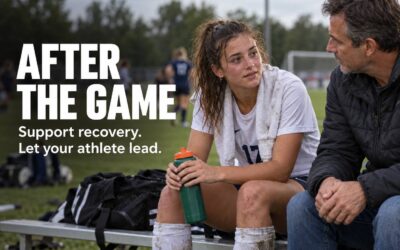
The Performance TipWait for the invitation. Right after competition, emotions run high and learning is hard. Let your athlete decide when, and whether, to talk. A simple opener works: “Do you want to talk about it, or would you rather have some space?” Ask what kind of help they want. If they want to talk, find out how: “Do you want me to just listen, or help you think it through?” This prevents the most common mismatch: they want to be heard, and you start solving. Ask questions. Leave the answers to them. Instead of explaining what you saw, help them walk through it: “When were you playing your best?” “Was there a moment things changed?” “What happened just before that?” “What would you want to try next time?” If you notice yourself steering toward the answer you already have in mind, stop. Their answer, even if it differs from yours, is the one they’ll act on.
“When I rush after a mistake, I’ll take one breath, use my cue word, and focus on my next job.” They take it to practice and refine it with their coach. Your job is simply to ask later: “How did that go?” Know when to stop. If the conversation keeps circling self-blame without producing insight, set the analysis aside. Focus on rest and connection. If you notice persistent distress, withdrawal, or changes beyond sport, check in directly and encourage appropriate mental health support. ________________
Your action this weekOutside the heat of competition, ask: “After a tough game, what kind of support from me actually helps?” Listen without defending past conversations. Their answer shows you how to show up next time. ________________
ReflectionThink about your last few post-game conversations. Who did most of the talking? Who identified what went wrong? Who decided what to work on? If the answer is usually you, your athlete may be learning to wait for your analysis rather than building their own. The most helpful question isn’t “What went wrong?” It’s “What did you notice?” Ask yourself: Does my athlete leave our conversations with more insight of their own, or just with mine? ________________
Resource of the WeekFor those that would like more on this topic – The Association for Applied Sport Psychology’s Eight Tips for Communicating with Adolescent Athletes Immediately After the Game. Written for younger athletes, its core message (listen first, support unconditionally) applies at every level. Adjust timing and language to your athlete’s age and independence.
References Tannenbaum, S. I., & Cerasoli, C. P. (2013). Do team and individual debriefs enhance performance? A meta-analysis. Human Factors, 55(1), 231–245. Keiser, N. L., & Arthur, W., Jr. (2021). A meta-analysis of the effectiveness of the after-action review (or debrief) and factors that influence its effectiveness. Journal of Applied Psychology, 106(7), 1007–1032. Harwood, C. G., & Knight, C. J. (2015). Parenting in youth sport: A position paper on parenting expertise. Psychology of Sport and Exercise, 16, 24–35. |