|
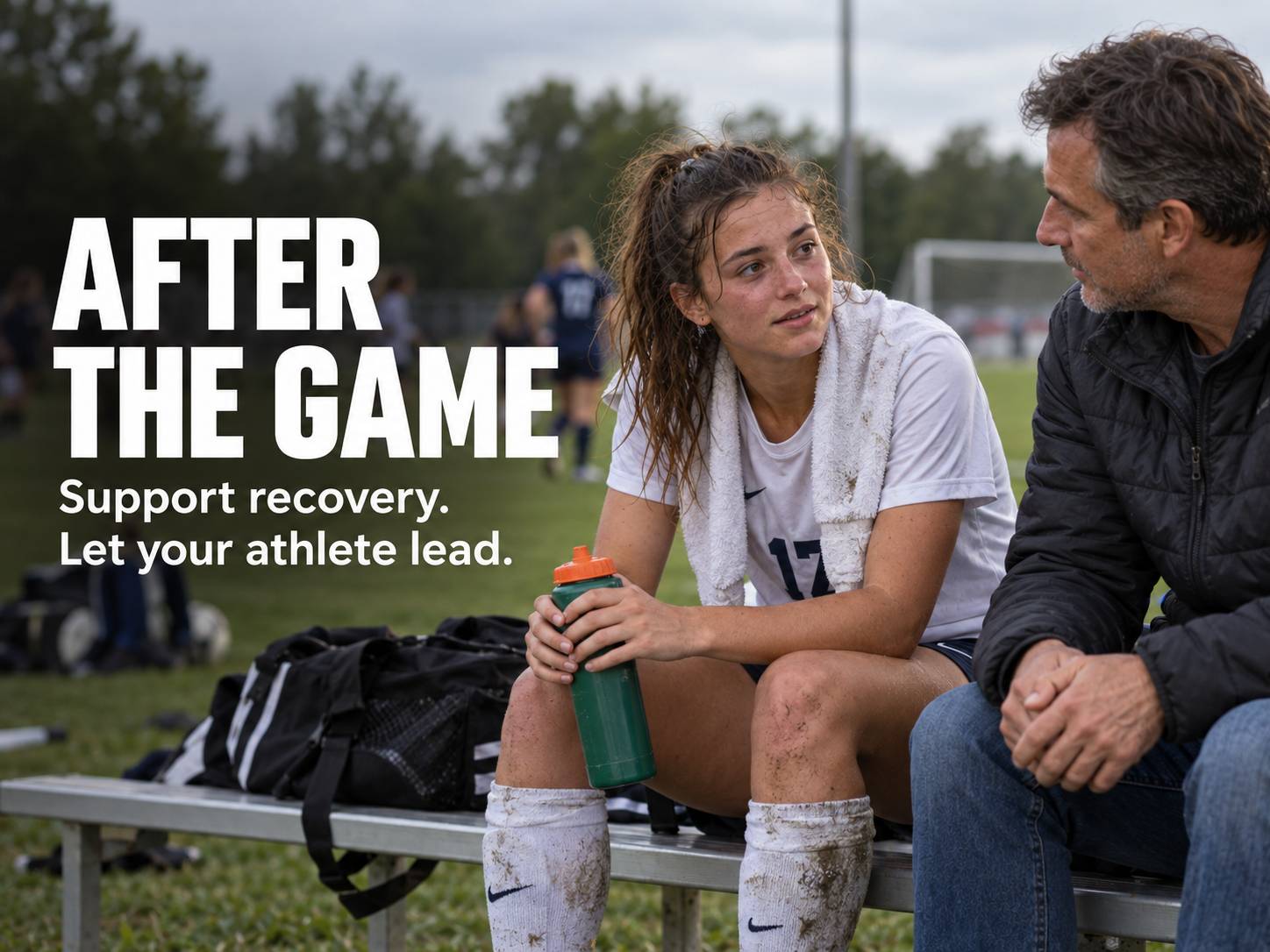
The final buzzer ends the game, but the work isn’t done. What happens in the hours afterward shapes how well your athlete recovers, how they make sense of the performance and how ready they are for the next game, practice or training session. Your role isn’t to replay the game. It’s to support two kinds of recovery: physical and mental. Recover the body and process the game. Let your athlete lead any conversation. _________________
Why the Hours After a Game MatterCompetition is a stressor. Recovery is what allows an athlete to absorb it and come back ready. Kellmann and colleagues’ consensus statement on recovery in sport (Kellmann et al., 2018) describes high-level performance as depending on a balance between stress (training, competition and other life demands) and recovery. It also notes that recovery has physical and psychological sides, and that athletes respond differently. No single routine fits everyone. That balance is why athlete wellbeing is the foundation of sustainable performance, not an extra. The emotional side matters as much as the physical one. After a big game, win or lose, athletes are often still wired. Asking them to analyze their performance before those emotions settle tends to produce defensiveness, harsh self-judgment or reflections that aren’t objective. That observation comes from professional practice, not a specific study, but most parents will recognize it. Parents feel it too. Harwood and Knight’s position paper on sport parenting (Harwood & Knight, 2015) identifies managing your own emotions around competition as part of effective sport parenting. A calm parent makes recovery easier for everyone. _________________
Physical Support: Make Recovery EasyYour most useful contribution is removing barriers to recovery. Plan these before the game, not after. Mobility In practice: Give your athlete 5–10 minutes after the game for light movement, gentle stretching or foam rolling. Pack a foam roller or massage ball in the bag. Treat it as a way to downshift, not a cure for soreness. Nutrition In practice: Pack a snack with both, such as a sandwich, yogurt and fruit, or chocolate milk. Follow it with a proper meal. For individual amounts, the authors recommend consulting a registered dietitian. Hydration In practice: Have a full water bottle ready. Expect your athlete to need more after long, hot or high-intensity games. Sleep In practice: Protect a predictable wind-down after late games. A shower, a meal, dimmed lights and devices put away signal the end of the day. Where possible, allow a later start the next morning. Activation In practice: Encourage something easy the next day, like a walk, an easy bike ride, a swim or a short mobility routine. It should feel refreshing, not like training. If the coach or trainer has a recovery plan, follow theirs. Rest In practice: Not every evening needs a lesson. Sometimes the best support is a normal night at home. _________________
Mental Support: Helping Your Athlete Process the GameHow athletes process a game is a skill, and it’s part of what mental performance and sport psychology help develop. Parents play an important supporting role. Let emotions settle first – Right after a game, acknowledge before you analyze: “That was a big one. How are you doing?”
Accept whatever comes: frustration, disappointment, relief or excitement. You don’t need to fix it or talk them out of it. Keep the result separate from their worth. A bad game is something they did, not who they are. That separation is central to confidence that holds under pressure. If your athlete is hard on themselves (“I was useless”), model fairer language without arguing: “You’re disappointed with how it went. You can work on it without talking to yourself that way.” Mosewich and colleagues studied self-critical varsity women athletes (Mosewich et al., 2013) and found that a brief self-compassion intervention reduced self-criticism, rumination and concern over mistakes. This supports the idea that athletes can hold high standards without attacking themselves. Follow their lead You don’t need to debrief every game. Today’s athletes already deal with pressure, distraction and constant evaluation. Home shouldn’t become one more place they’re assessed. Many athletes process a game with their coach, teammates or on their own, and that’s healthy. If your athlete wants to talk, often later that evening or the next day, be ready to listen. If they don’t, let it be. Leave technical feedback to the coach so they don’t get mixed messages. Four questions to guide the conversation When your athlete does want to talk, these four questions can give the conversation a useful shape. They aren’t a checklist for every game. Use them loosely, in your own words, and only as far as your athlete wants to go.
The last question reflects self-determination theory (Ryan & Deci, 2000), which links a sense of choice (autonomy), capability (competence) and connection (relatedness) with motivation and wellbeing. When athletes choose their own next step, they’re more likely to own it. For more on how this drives long-term commitment, see how sport psychology helps athletes stay driven. Your job as a parent is to listen, ask a question or two and reflect back what you hear. Resist answering for them. When the conversation ends, let the rest of the day continue. _________________
Rehearse, Observe and AdaptRehearse: Try the questions in a casual conversation after a routine practice or a comfortable win, so they feel natural before a hard loss. Observe: Over several weeks, notice whether your athlete comes to you more often, names specific actions instead of sweeping judgments and finishes these conversations calmly. Adapt: If a question starts to feel like a test, drop it. Use one question instead of four, change the wording to suit their age, or simply listen. Some athletes prefer to reflect privately and share only what they choose. One difficult game isn’t a mental health concern. But if distress persists, affects daily life, or your athlete raises concerns about how they’re feeling, help them connect with a qualified mental health professional. _________________
What This Looks Like in PracticeThese examples are illustrative and not based on real athletes. _________________
Try This After the Next GameExercise: Before your athlete’s next game, plan the post-game routine. Pack a snack, a drink and a foam roller, and keep the evening free for rest. Keep the four questions in mind in case your athlete wants to talk. Measure progress by one action: If your athlete wanted to talk, you listened more than you spoke and let them choose their own next step. If they didn’t, you let it be. Reflection question: After a game, does my support help my athlete recover and reflect, or does it add to what they’re already carrying? _________________
The Bottom LineWhat happens after the game matters as much as what happens during it. Your most useful work is behind the scenes: have food and water ready, make room for light movement and protect sleep. Give emotions time to settle before anyone analyzes the game, and when your athlete wants to talk, let them lead. Recovery won’t look the same for every athlete or after every game. What stays the same is your role: lower their load, keep their worth separate from the result and let them own their next step. Do that consistently and your athlete learns to treat each game, good or bad, as something to learn from rather than something to carry. _________________
References
|